
close
Choose Your Site
Global
Social Media


Views: 0 Author: Site Editor Publish Time: 2026-05-18 Origin: Site


Automotive OEMs and Tier-1 suppliers face an ongoing battle. They must balance charging speed, vehicle weight, and strict upfront cost constraints. Engineers evaluating modern charging architectures often struggle to find the sweet spot for space-constrained electric vehicle platforms. Finding a reliable charging solution matters immensely. Oversized components increase bill-of-materials costs and waste valuable packaging space. We want to solve this engineering bottleneck.
This article provides a transparent, engineering-focused evaluation of compact charging modules. You will learn about recent topology advancements. We cover the realities of 2-in-1 integration and essential compliance standards. We will also outline clear criteria to help you shortlist the right supplier for your project. Let us explore why a right-sized power solution might be the most strategic choice. It can optimize your next electric platform without breaking the budget or complicating the assembly line.
Strategic Fit: The 3.3kW OBC is the optimal baseline for budget-conscious electric passenger vehicles, light electric commercial vehicles, and localized fleets where overnight charging is sufficient.
Technical Benchmarks: Top-tier models achieve ≥93-95% efficiency using advanced PFC+LLC resonant topologies and Wide Bandgap (WBG) materials.
Integration ROI: Transitioning to 2-in-1 modular designs (OBC + DC/DC) significantly reduces vehicle weight, manufacturing footprint, and carbon emissions.
Compliance Imperative: Enterprise-grade selection requires verifiable ISO26262 ASIL B ratings, UDS diagnostic support, and explicit MTBF (Mean Time Between Failures) data.
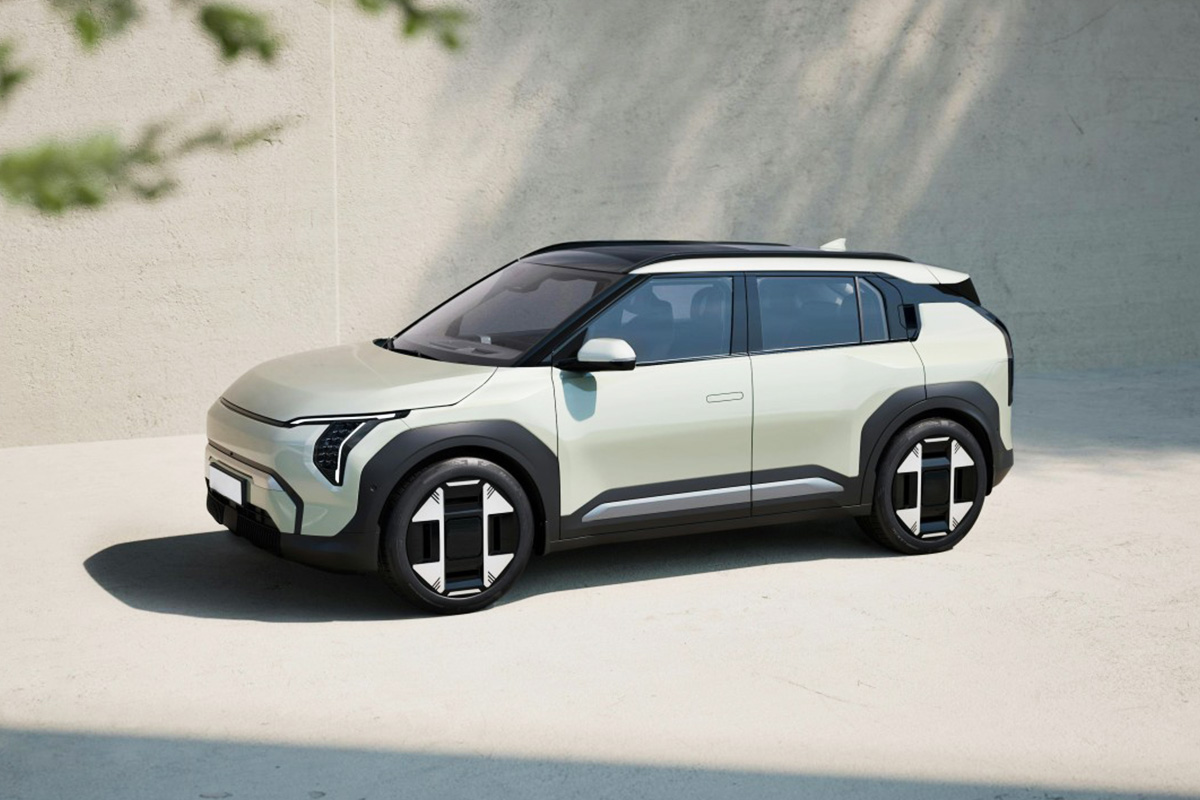
Many industry professionals hold a misconception. They believe higher charging power always yields better results. We must challenge this narrative. Choosing an 11kW or 22kW system often introduces diminishing marginal returns. These high-power units add significant weight and hardware expense. For battery packs under 50kWh, or vehicles with lower daily mileage, massive chargers sit underutilized. A 3.3kW OBC perfectly handles overnight replenishment for these profiles. It restores full battery capacity within a standard 10-to-12-hour parking window. You avoid over-engineering the powertrain.
Different mobility sectors demand tailored power delivery. You can categorize the ideal applications for a compact charger into distinct mobility tiers.
Mobility Sector | Vehicle Type | Core Engineering Priority |
|---|---|---|
Passenger Cars | electric passenger vehicle (entry sedans, PHEVs) | Cost-efficiency and trunk space preservation. |
Commercial / Industrial | electric commercial vehicle & | Predictable operational loops and localized logistics. |
Micro-Mobility | electric 2W/3W platforms | Aggressive weight-to-power ratios and compact dimensions. |
For entry-level passenger cars and urban commuter vehicles, trunk space remains paramount. A compact charger frees up critical cabin geometry. Meanwhile, an off-highway construction vehicle generally idles overnight at a base camp. It does not require ultra-fast AC charging. For micro-mobility setups, engineers frequently implement a 3.3kW fan cooled OBC for 2W/3W platforms. This specific unit balances the required charging capability against extreme payload limitations.
Selecting a right-sized charger directly lowers upfront Bill of Materials (BOM) costs. You spend less on the charger housing, cooling lines, and power electronics. Additionally, this approach protects the core battery asset. Pushing lower, controlled C-rates during everyday AC charging generates less heat. Thermal stress remains the leading cause of premature battery degradation. By standardizing a lower-wattage nighttime charging routine, you inherently preserve cell chemistry over the vehicle's lifespan.
Modern chargers have evolved significantly from older, single-stage designs. Top-tier hardware now utilizes a dual-stage architecture. The first stage handles Power Factor Correction (PFC) control. The second stage employs an LLC resonant step-down isolation converter. This split approach allows engineers to eliminate high-voltage electrolytic capacitors from the circuitry. Removing these degradation-prone components dramatically extends the overall hardware lifespan.
Materials science also plays a massive role. Legacy silicon components hit efficiency walls around 92%. Today, Silicon Carbide (SiC) and Gallium Nitride (GaN) components are transforming the landscape. Wide Bandgap (WBG) materials handle higher switching frequencies with minimal thermal loss. They routinely push conversion efficiencies past 95%. They also achieve much higher power densities, effectively shrinking the charger's physical footprint.
Heat dissipation dictates charger reliability. You generally choose between liquid cooling and air cooling. Liquid cooling offers dense packaging and stable temperatures. It works beautifully for a standard passenger car equipped with an existing coolant loop. However, adding plumbing increases assembly complexity.
Air-cooled or natural convection models present a different value proposition. Fan cooling provides active thermal management without messy coolant lines. This is exactly why the 3.3kW fan cooled unit remains indispensable for 2W/3W applications. Two-wheelers and three-wheelers completely lack the space for complex liquid loops. Fan cooling strikes the perfect balance of lightweight simplicity and effective heat rejection.
Engineers must demand strict electrical baselines before approving a module. High-quality modules exhibit exceptional stability under load. You should expect the following baseline expectations when evaluating prototype spec sheets:
Voltage Regulation Accuracy: Must remain ≤1% to ensure steady battery chemistry absorption.
Ripple Coefficients: Must stay ≤1% to prevent micro-fluctuations from damaging the BMS.
Standby Power Consumption: Should be ≤5W to prevent parasitic battery drain during long parking intervals.
Physical space inside an EV platform costs money. Combining independent modules saves both space and assembly time. You can integrate the main charger with a low-voltage DC/DC converter. A common pairing merges a 3.3kW AC/DC unit with a 1kW or 2kW converter designed for the 14V auxiliary system.
This 2-in-1 convergence delivers exceptional manufacturing outcomes. First, it reduces high-voltage harness complexity. You eliminate redundant connectors and cables. Second, it drastically reduces the overall footprint. Many premium 2-in-1 modules now weigh under 4 kilograms. Finally, fewer connections mean fewer assembly line errors. A streamlined installation process directly lowers your manufacturing fault rates.
A charger cannot function as a dumb power brick in a modern software-defined vehicle. It must act as an intelligent node.
CAN Bus Integration
The charger communicates continuously with the Battery Management System (BMS) via the CAN Bus network. It reads real-time ambient temperatures and cell voltage levels. Based on this data, the unit dynamically adjusts its Constant Current (CC) and Constant Voltage (CV) profiles. This dynamic handshake prevents overcharging in extreme weather conditions.
UDS Protocol & Autosar
Diagnostic capabilities separate consumer-grade electronics from automotive-grade hardware. Support for Unified Diagnostic Services (UDS) is non-negotiable for modern Tier-1 architectures. UDS allows service technicians to isolate faults quickly using standardized codes. Furthermore, compatibility with Autosar (Automotive Open System Architecture) ensures the charger integrates seamlessly into the broader vehicle control unit network. It allows for Over-The-Air (OTA) updates, keeping the firmware current long after the vehicle leaves the factory.
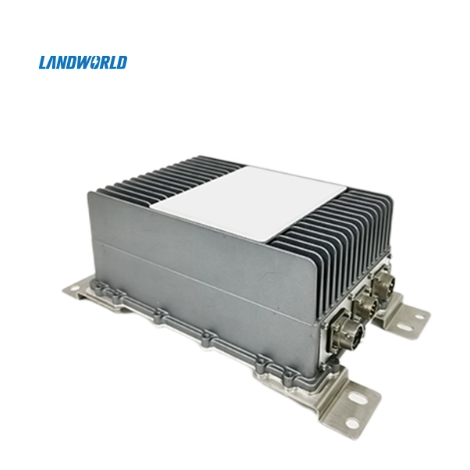
Electrical failures inside a high-voltage system can cause catastrophic damage. An enterprise-grade charger must incorporate a mandatory 12-layer protection mechanism. If you are auditing a supplier, verify these specific hardware cutoffs:
Input Over/Under Voltage: Prevents grid spikes from reaching the internal transformer.
Output Over-Current Cutoff: Must feature a strict +1% tolerance threshold to stop battery surge damage instantly.
Reverse Polarity Fuse: A physical failsafe that blows immediately if connections are wired backward.
Grounding Fault Protection: Isolates the chassis from dangerous leakage currents.
CAN Communication Timeout: Automatically shuts down power delivery if the BMS signal drops for more than a few milliseconds.
Vehicles operate in brutal environments. The internal electronics must survive water, dust, and constant shaking. Ingress protection is your first defense. An IP67 rating serves as the absolute minimum for standard passenger cars. If you build marine equipment or an exposed construction vehicle, you may need IP6K9K to withstand high-pressure washing.
Vibration tolerance is equally critical. Always reference established automotive standards. The unit must survive multi-axis testing, typically at 25-500Hz and 30m/s⊃2;. Thermal derating limits also dictate real-world usability. The module must guarantee safe operation from -40°C to +85°C. It should trigger an automatic power-down sequence if internal temperatures exceed 90°C.
Systemic electrical failures threaten passenger safety. ISO26262 functional safety compliance mitigates these risks. You must demand an ASIL B certification for any charger entering mass production. This certification proves the supplier uses rigorous software and hardware development processes. Additionally, request explicit MTBF (Mean Time Between Failures) data. A reliable automotive charger should target 150,000+ hours of continuous operation before statistical failure.
Supplier selection dictates project success. You should favor partners who default to extreme engineering transparency. Do they hide technical details behind a Non-Disclosure Agreement (NDA)? If so, proceed with caution. A confident supplier provides explicit pin instructions and wire diameter requirements upfront. They should also supply a comprehensive LED status code dictionary. This dictionary allows your field engineers to perform rapid fault isolation during initial prototype builds.
Evaluate the timeline risks carefully. Customizing a Printed Circuit Board (PCB) layout or tooling new housing molds adds months to your development cycle. It also introduces new validation risks. Whenever possible, prioritize off-the-shelf, multi-voltage platforms. Standardized units that support wide input ranges (e.g., 90V to 264V) offer immediate global grid compatibility without requiring custom engineering iterations.
Never move directly from a spec sheet to bulk procurement. Implement a strict, phased validation approach to protect your engineering budget.
Single Bench Test: Run the unit in a controlled lab. Validate the claimed 95% efficiency and verify the voltage ripple parameters.
Environmental Chamber Test: Bake the unit at 85°C and freeze it at -40°C. Monitor the thermal derating curves to ensure the software throttles power safely.
Small-Batch Fleet Trial: Install 10 to 20 units into physical vehicle mules. Monitor CAN bus logs over several weeks of real-world driving and charging.
Bulk Procurement: Only release mass purchase orders after the fleet trial yields zero critical UDS fault codes.
Engineers must stop viewing the 3.3kW charger as a legacy component. It represents a highly optimized, cost-effective baseline for specific mobility tiers. By matching power output to actual battery capacity and usage patterns, you eliminate unnecessary hardware bulk. You also streamline your assembly lines.
As you move forward, adjust your procurement strategy. Instruct your engineering teams to prioritize Wide Bandgap topologies like SiC and GaN. Demand modern communication protocols, specifically UDS and CAN, to ensure the charger integrates into your software-defined architecture. Finally, seek out 2-in-1 integration potential when requesting your next batch of prototype samples. Smart integration remains the clearest path to achieving your lightweighting and cost-reduction goals.
A: It comes down to a strict cost-benefit analysis. For batteries under 40-50kWh parked overnight for 10 or more hours, 3.3kW fully replenishes the pack. It provides this charge with a significantly lower hardware cost, less weight, and reduced thermal management overhead compared to a 6.6kW unit.
A: A 2-in-1 design reduces housing materials and utilizes shared cooling plates. It completely eliminates redundant high-voltage connectors and heavy wiring harnesses. This consolidation shortens assembly line time and drastically lowers the risk of connection faults during manufacturing.
A: Two-wheelers and three-wheelers lack the physical space and payload capacity required for complex liquid-cooling loops. Fan cooling offers the optimal balance. It provides necessary active thermal management while maintaining the lightweight simplicity these micro-mobility platforms demand.
A: UDS (Unified Diagnostic Services) is a standardized automotive protocol. It allows service technicians to easily read specific fault codes directly from the charger. It also facilitates OTA (Over-The-Air) firmware updates. This capability drastically reduces warranty repair times and simplifies field maintenance.


