
close
Choose Your Site
Global
Social Media


Views: 13 Author: Site Editor Publish Time: 2025-10-29 Origin: Site


1. Introduction: The Quiet Power Behind Electric Buses
Electric buses are reshaping urban transportation by offering cleaner air, quieter streets, and a more energy-efficient public transit experience. While traction motors and high-capacity battery packs often dominate attention, the DC/DC converter plays an equally critical but less visible role. It ensures that all onboard systems, from lighting and HVAC to control electronics and infotainment, receive stable and reliable power throughout the bus’s operation.
Landworld Technology, a trusted provider of modular EV power solutions, has focused extensively on developing high-reliability DC/DC converters that deliver consistent performance. By ensuring smooth operation of auxiliary systems, these converters help maintain passenger comfort, operational safety, and overall fleet efficiency during daily urban service, including high-demand rush hours or extreme weather conditions.
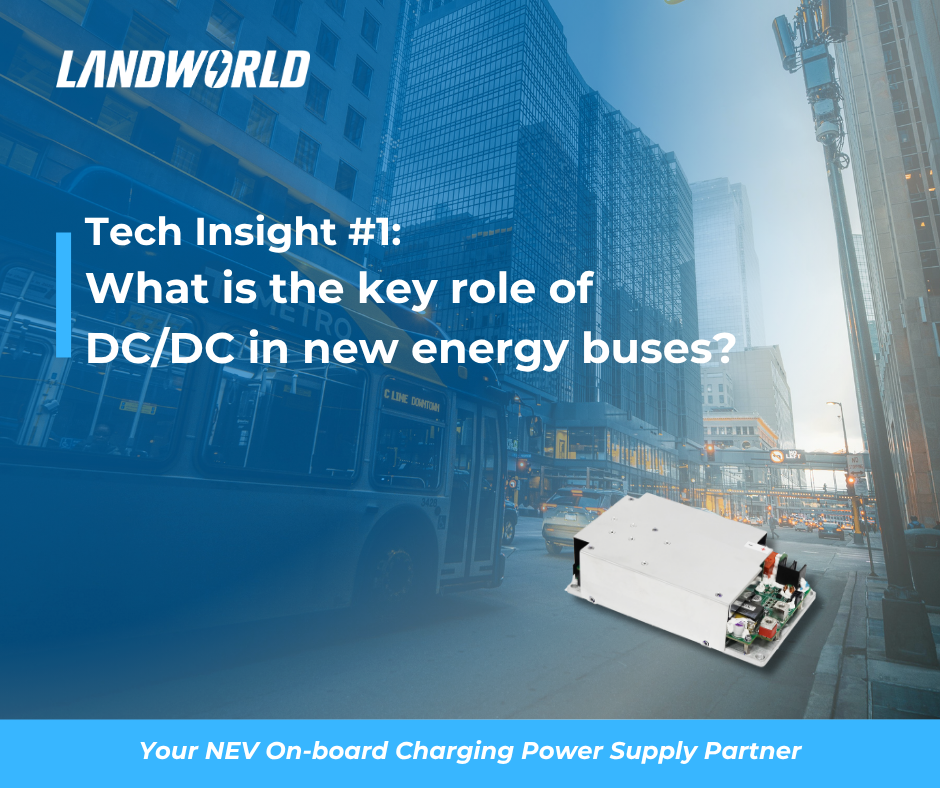
2. Why DC/DC Converters Matter in Practice
In practical electric bus operations, the DC/DC converter serves as the bridge between the high-voltage battery and various low-voltage systems. Its contributions extend beyond simple voltage conversion:
Stable Auxiliary Systems:Lighting,HVAC systems, infotainment, driver assistance, and other control electronics receive consistent voltage. This improves passenger experience and operational reliability even under fluctuating load conditions.
Enhanced Energy Efficiency:Efficient voltage conversion reduces energy loss, extending battery life and improving overall electric bus energy efficiency. Minimizing wasted energy also supports the sustainability goals of fleet operators and urban transport authorities.
Component Protection:Sensitive electronics are safeguarded from voltage spikes or drops. This reduces maintenance costs and prevents premature failures that could otherwise disrupt daily operations.
Operational Reliability:
For buses operating long urban routes with frequent stops, traffic variability, and high passenger load, uninterrupted power delivery is crucial. The DC/DC converter ensures that all onboard systems remain functional and responsive throughout the journey.
Although it might not receive as much attention as motors or batteries, the DC/DC converter is essential to the smooth operation, safety, and efficiency of every modern electric bus.
3. Technical and Operational Challenges in Electric Bus Applications
Developing DC/DC converters for electric buses requires careful attention to multiple engineering and operational challenges:
Compact High-Power Design: Buses offer limited installation space. The converter must deliver sufficient power while remaining compact and easy to integrate with other onboard systems.
Advanced Thermal Management: Long operational hours and heavy power loads generate heat that must be efficiently dissipated. Proper thermal design prevents performance degradation and extends the lifespan of both the converter and connected components.
Electromagnetic Compatibility (EMC): DC/DC systems must avoid generating electromagnetic interference that could impact communication, control, or sensor systems onboard the bus.
Vibration and Durability Resistance: Urban buses are subject to continuous vibration, potholes, temperature variations, and sudden load changes. A robust DC/DC converter design ensures long-term reliability in these demanding conditions.
Integration Across Vehicle Architectures: Different bus models may feature varying electrical architectures. A versatile converter must adapt to multiple voltage levels and auxiliary configurations, providing consistent performance regardless of vehicle type.
Addressing these challenges ensures that electric bus fleets remain operationally efficient, safe, and cost-effective for fleet operators while maintaining passenger satisfaction.
4. Landworld Technology’s Approach
Landworld Technology addresses these challenges by integrating advanced engineering principles with practical application experience. Our DC/DC converters are designed with:
Modular and Scalable Solutions: Easily adapted to diverse bus layouts, voltage ranges, and auxiliary system requirements.
High Reliability: Subjected to extensive testing, including vibration, thermal cycling, and EMC performance, ensuring dependable operation in real-world urban transit environments.
Efficiency-Focused Design: Minimizes energy loss to reduce strain on the high-voltage battery, improving operational efficiency and sustainability.
Support for Daily Urban Operations: Guarantees smooth functionality of all auxiliary systems, even under the demands of long routes, heavy passenger loads, or challenging environmental conditions.
By combining technical innovation with application-focused design, Landworld enables fleet operators to maximize uptime, reduce maintenance, and achieve superior operational performance.
5. Conclusion: Driving Reliable and Responsible Mobility
Although small in size, the DC/DC converter plays a significant role in ensuring the reliability, safety, and performance of electric buses. Landworld Technology continues to develop energy-efficient, high-reliability DC/DC converters that support urban fleet operators in delivering safe, comfortable, and sustainable public transportation.
Our commitment is to provide dependable, efficient, and practical power solutions that help cities meet the growing demands of electric mobility, improve passenger experience, and support a sustainable and responsible transportation ecosystem.


