
close
Choose Your Site
Global
Social Media


Views: 0 Author: Site Editor Publish Time: 2026-04-30 Origin: Site


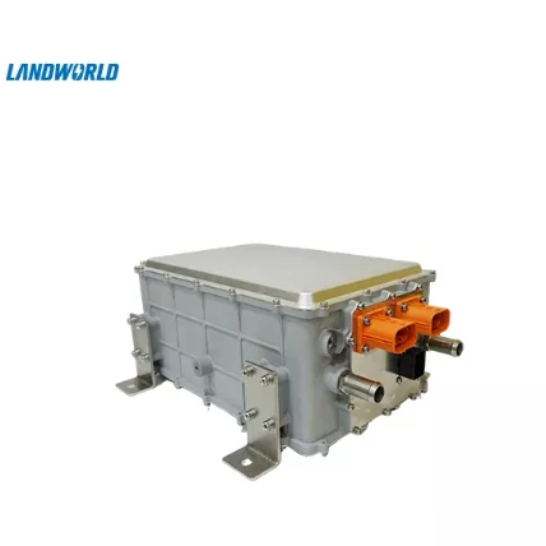
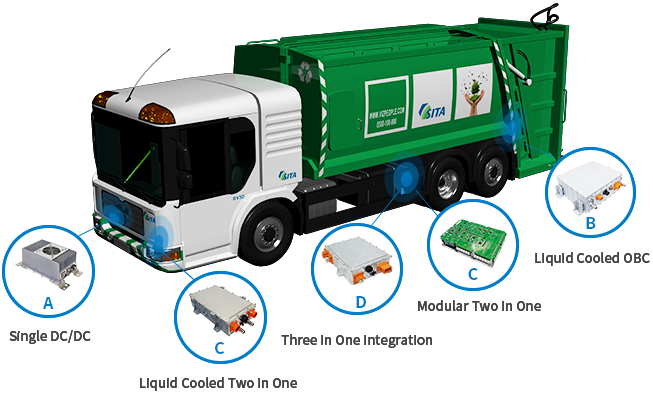
The electrification of municipal sanitation fleets introduces extreme auxiliary power demands. Standard passenger-vehicle architectures simply cannot support these heavy loads. Refuse trucks and street sweepers require continuous, high-draw power. They must run heavy hydraulic compactors, vacuum pumps, and automated lifting arms. They perform these tasks while operating in harsh, wet, and high-vibration environments. Securing fleet reliability requires moving beyond basic specification matching. You need specialized hardware to prevent operational failures on daily routes. A robust 12kW DC/DC unit engineered specifically for heavy-duty commercial use is critical. It safely steps down high-voltage battery power—whether 400V or 800V architectures—to stable low-voltage networks like 12V, 24V, or 48V. It accomplishes this without risking thermal failure or triggering vehicle-wide system faults. In the following sections, you will discover the exact engineering requirements for fleet integration. We will explore thermal endurance, environmental sealing protocols, and diagnostic intelligence necessary for uninterrupted municipal operations.
Operational Stability: A dedicated DC/DC Converter for Sanitation EVs prevents localized voltage drops from triggering vehicle-wide system faults during peak load operations (e.g., active compaction).
Environmental Resilience: Municipal applications mandate IP67 and IP6K9K protection ratings to withstand high-pressure washdowns and continuous exposure to corrosive road debris.
Scalability & Diagnostics: Modern 12kW systems leverage parallel connectivity for power scaling and CAN FD/UDS protocols for predictive fleet maintenance and cybersecurity.
Cost vs. Reliability: Evaluating hardware requires balancing upfront topology costs (e.g., advanced Si-MOSFET vs. SiC) against the total cost of route downtime and component failure.
Sanitation fleets operate under brutal daily conditions. Standard commercial EV converters often degrade under these continuous duty cycles. Refuse vehicles compact trash hundreds of times per day. This constant engagement places immense stress on the electrical architecture. Basic power distribution units suffer from thermal throttling during these events. This throttling leads to sudden route disruptions and stranded vehicles.
A viable power solution must guarantee uninterrupted energy delivery. Low-voltage systems like heavy-duty lighting, cab HVAC, and hydraulic controllers need constant, stable voltage. They must draw this power independently of the traction motor's fluctuating demands. If the traction motor accelerates hard, the auxiliary power cannot dip. Consistent low-voltage supply prevents control module resets.
Auxiliary power failures in sanitation fleets cause immediate vehicle grounding. You cannot operate a garbage truck if the hydraulic controllers lose power. This grounding results in severe municipal Service Level Agreement (SLA) penalties. Choosing a purpose-built DC/DC Converter for Sanitation EVs ensures route completion. It completely isolates the vulnerable low-voltage network from aggressive high-voltage fluctuations.
Heat destroys power electronics. Sanitation trucks feature dense chassis layouts. They leave very little room for airflow. Therefore, traditional air-cooled systems fail frequently in this sector. Fans pull in dust, debris, and corrosive moisture. Filters clog rapidly. Once a filter clogs, the internal components overheat and derate.
Liquid-cooled systems solve this problem. You integrate them directly into the vehicle's existing thermal loop. They typically utilize a 50/50 water-glycol mix. This method actively pulls heat away from the internal printed circuit boards. It allows the unit to maintain greater than 90% efficiency under continuous 12,000W output. We can observe the performance differences in the comparison chart below.
Cooling Method | Volume/Footprint | Maintenance Requirement | Continuous Load Efficiency (12kW) | Environmental Vulnerability |
|---|---|---|---|---|
Air-Cooled | Large (requires airflow clearance) | High (frequent filter cleaning) | Derates after 30-45 minutes | High (dust, moisture ingress) |
Liquid-Cooled | Compact (dense packaging) | Zero (sealed loop integration) | Maintains >90% indefinitely | Zero (fully enclosed housing) |
Fleet engineers must assess compatibility across multiple platforms. Legacy fleets utilize 400V architectures. Next-generation heavy-duty platforms are moving to 800V architectures. A modern converter must handle both seamlessly. You should look for wide-band input ranges, typically spanning from 200V to 900V.
Wide input tolerance is not just about future-proofing. It actively protects the truck today. When a driver accelerates aggressively while simultaneously engaging the hydraulic compactor, the main battery experiences sudden voltage sag. A narrow-band converter will shut down during this sag. A wide-band unit absorbs the fluctuation. It continues outputting a stable 24V or 48V to the auxiliary systems without interruption.
Sanitation vehicles operate in terrible environments. They drive through deep puddles, salt-treated winter roads, and corrosive landfill debris. Standard IP44 or IP67 ratings are insufficient for refuse trucks. IP67 protects against temporary submersion, but it fails against directed pressure.
Municipal depots clean these trucks daily using high-pressure, high-temperature washdowns. You must specify IP6K9K ratings for your power electronics. This rating guarantees resilience against close-range, high-pressure steam cleaning. It ensures water never breaches the housing to short the internal circuitry.
Ingress Rating | Solid Protection | Liquid Protection Level | Suitability for Sanitation EVs |
|---|---|---|---|
IP44 | Objects > 1mm | Splashing water from any direction | Unsuitable. Fails quickly in wet conditions. |
IP67 | Dust-tight | Temporary immersion (up to 1 meter) | Marginal. Fails during pressure washing. |
IP6K9K | Dust-tight | High-pressure, high-temperature jets | Mandatory. Survives daily depot washdowns. |
Protecting mechanics and operators is paramount. High-voltage systems require fail-safe physical and electrical isolation. You must ensure the inclusion of a High Voltage Interlock Loop (HVIL). The HVIL instantly cuts high-voltage power if a technician unplugs a connector. This prevents fatal electrical arcs.
Galvanic isolation is equally critical. It separates the high-voltage input from the low-voltage output. It must comply with strict EN61010 automotive standards. Furthermore, redundant software protection mechanisms must monitor the system. Over-Voltage Protection (OVP), Over-Current Protection (OCP), and Over-Temperature Protection (OTP) constantly guard the internal circuitry. They isolate faults before they damage adjacent vehicle controllers.
Older commercial vehicles relied on basic CAN 2.0B protocols. Modern municipal fleets require much faster data transmission. Transitioning to CAN FD (Flexible Data-Rate) provides the bandwidth needed for complex telemetry. It transmits larger data payloads in milliseconds.
Integration with UDS (Unified Diagnostic Services) transforms fleet maintenance. UDS allows fleet managers to interrogate the converter remotely. Real-time telemetry exposes temperature spikes or unusual current draws. You can detect anomalies weeks before a catastrophic failure occurs. This predictive intelligence keeps trucks on their routes and out of the repair bay.
Municipal fleets are becoming connected internet nodes. Hackers frequently target local government infrastructure. Unsecured vehicle networks present a massive vulnerability. If an external bad actor accesses the municipal fleet network, they could spoof CAN messages. They could theoretically command the converter to shut down.
Onboard cybersecurity is now a mandatory engineering requirement. Modern controllers encrypt diagnostic communications. They validate every packet of data. This cryptographic security prevents external interference. It ensures only authorized depot tools can update firmware or alter operating parameters.
Municipalities frequently upgrade their vehicles post-purchase. They might add automated side-loading arms. They might install electrified winter heating elements for the cab. These additions drastically increase the auxiliary load. Upgrading the entire power distribution unit is incredibly disruptive.
Engineers solve this through modular paralleling. You can bridge multiple 12kW units together. If a truck needs 24kW of auxiliary power, you simply install a second unit on the same communication bus. They sync automatically. They share the electrical load evenly. This paralleling capability makes a specialized DC/DC Converter for commercial EV architectures highly adaptable over a ten-year lifespan.
Engineering robust hardware requires balancing performance with supply chain realities. Many manufacturers push blanket SiC (Silicon Carbide) adoption. SiC is excellent, but it carries a massive supply chain premium. It drives up hardware acquisition barriers.
Optimized full-bridge Si-MOSFET topologies offer a smarter engineering path. Advanced switching algorithms allow Si-MOSFET designs to achieve full 800V compatibility. They deliver incredibly high power density. Engineers can condense a 12,000W output into a lightweight housing weighing roughly 4.5kg. You achieve the necessary thermal and electrical performance without the premium SiC price tag.
Integrating new power electronics requires careful engineering alignment. You cannot simply bolt the hardware to the chassis and plug it in. The hidden friction lies in software integration. Engineering teams must spend dedicated hours tuning the firmware. They must map the converter's output response to specific hydraulic load profiles.
For example, a refuse compactor creates massive, instantaneous spikes in current demand. The firmware must anticipate this curve. It must prevent the converter from interpreting the spike as a short circuit. Proper tuning prevents false-positive system shutdowns during active compaction.
Sanitation routes inflict a severe physical toll on machinery. Trucks bounce over potholes, navigate uneven landfill roads, and experience constant low-frequency juddering from hydraulic pumps. Hardware longevity depends heavily on structural ruggedization. Electrical specifications alone do not guarantee survival.
Internal components must be heavily anchored. Manufacturers use advanced potting techniques. They encapsulate the entire printed circuit board in specialized resin. This encapsulation prevents heavy capacitors from snapping off the board under sustained vibration. It also eliminates internal air gaps, further improving thermal transfer.
Upgrading auxiliary power electronics provides multiple operational benefits. A 12kW high-efficiency DC/DC Converter definitely lowers thermal waste. It draws less parasitic energy from the main battery, which extends the vehicle's driving range marginally. However, range extension is a secondary benefit.
The primary benefit is the drastic reduction in unscheduled downtime. A ruggedized, intelligent converter prevents the electrical cascading failures that ground commercial fleets. It ensures the truck completes its daily route. It removes the auxiliary power unit from the list of common mechanical failures.
Selecting the right power electronics requires a stringent evaluation process. You must push vendors past their marketing brochures. Do not accept peak performance numbers at face value. Use the following criteria to evaluate potential hardware.
Demand Documented Thermal Derating Curves: Peak power claims mean nothing if the unit throttles after five minutes. Demand charts showing continuous output at 65°C ambient temperatures.
Require Fluid Pressure-Drop Specifications: Liquid cooling integration impacts the vehicle's entire thermal loop. You must verify the internal pressure drop to ensure the existing water pump can handle the flow rate.
Verify Automotive Safety Standards: Ensure full compliance with E-Mark certifications. Verify RoHS compliance for environmental safety. Check for certified EN61010 galvanic isolation reports.
Assess Diagnostic Software Maturity: Ask for a demonstration of the UDS telemetry dashboard. Verify the unit supports CAN FD natively.
Once you filter the vendors, move immediately to real-world validation. Do not deploy new electronics fleet-wide based solely on lab data.
Initiate a Single-Route Pilot: Install the evaluation unit on a single sanitation truck. Choose a route known for heavy compaction demands and poor road conditions.
Validate Dynamic Load Response: Monitor the 24V/48V network during simultaneous driving and hydraulic operation. Ensure voltage remains perfectly stable.
Monitor EMI/EMC Behavior: Heavy switching electronics generate noise. Verify the converter does not introduce electromagnetic interference into the truck's radio or sensor networks.
Inspect Environmental Sealing: After one month of daily high-pressure depot washdowns, inspect the HVIL connectors for moisture ingress.
Selecting the right power conversion unit goes far beyond matching output wattage to a spec sheet. It requires a holistic evaluation of the hardware. You must scrutinize environmental sealing, thermal endurance, and diagnostic intelligence. A standard component simply will not survive the brutal duty cycles of municipal refuse collection.
For sanitation fleets, the converter is not a peripheral accessory. It is the critical bridge that dictates whether the vehicle completes its route or requires an emergency tow. When the low-voltage network fails, the entire truck dies. Fleet operators must prioritize engineered ruggedness over baseline commercial specifications. By demanding IP6K9K protection, CAN FD telemetry, and robust liquid cooling, you guarantee continuous operation in the harshest environments.
A: 12kW provides the necessary overhead to simultaneously power heavy-duty hydraulic controllers, battery thermal management systems, and cab HVAC without risking voltage dips.
A: Yes, modern units are designed with wide-band inputs (up to 900VDC) to step down power safely to 24V or 48V networks, often utilizing advanced half-bridge or full-bridge topologies to manage heat and noise.
A: Liquid cooling significantly reduces the physical footprint and prevents thermal degradation. It requires integration into the vehicle's existing thermal loop (monitoring pressure drops and flow rates), effectively eliminating the maintenance associated with clogged fan filters in air-cooled units.


