
close
Choose Your Site
Global
Social Media


Views: 0 Author: Site Editor Publish Time: 2026-07-10 Origin: Site


You can find three main types of EV chargers. These are Level 1, Level 2, and Level 3 (DC Fast Charging). Level 1 and Level 2 use AC power. Level 3 gives DC fast charging. Level 1 charging is good for home use. It charges slowly. Level 2 charging is faster for your EV. It works well at home or at work. DC fast chargers, like Tesla Superchargers, charge quickly at public stations. The table below shows how many public EV charging stations and fast chargers are in big markets:
Region | Total Charging Stations | Fast Chargers | Slow Chargers |
|---|---|---|---|
China | 1.15 million | 470,000 | 680,000 |
United States | N/A | N/A | |
Europe | N/A | N/A |
You can pick the best EV charger for you. Compare the types and their charging speeds.
Level 1 chargers are ideal for home use and short trips. They plug into standard outlets and charge slowly, taking 22 to 40 hours for a full charge.
Level 2 chargers offer faster charging, adding 10 to 60 miles of range per hour. They are suitable for home, work, and public charging stations.
DC Fast Chargers (Level 3) provide the quickest charging, adding 60 to 200 miles in just 20 to 30 minutes. They are best for long trips and busy drivers.
Consider your driving habits and budget when choosing a charger. Level 1 is the cheapest, while Level 3 is the most expensive but offers speed.
Always check if your EV supports the charger type you choose, especially for DC Fast Chargers, as not all vehicles are compatible.

Level 1 EV chargers plug into a normal 120-volt outlet. They give about 1 to 2.4 kW of power. You do not need special wiring to use them. Most homes already have these outlets. Level 1 EV charging uses AC power. This makes it easy to start charging your EV.
Level 1 EV chargers use a regular 120-volt outlet.
They give 1 to 2.4 kW of power.
You can use them anywhere with a normal outlet.
Level 1 charging is the slowest way to charge an EV. It can take 22 to 40 hours for a full charge. This works well if you charge your car overnight at home. If you only drive short trips, Level 1 charging is enough. These chargers are good for backup or emergency charging. Many people use Level 1 chargers in rental homes or when they move. They are easy to carry and simple to use.
Home EV charging for low daily driving
Backup or emergency EV charging
Portable EV charger use
Good for renters or temporary charging
Level 1 EV chargers are the easiest and most common type. You can use them with any normal outlet. You do not need special installation.
It is important to know the good and bad sides of Level 1 charging. The table below shows the main points:
Advantages | Disadvantages |
|---|---|
No extra wiring or changes needed | Slowest charging speed |
Easy to take with you | Only adds 3-6 miles of range each hour |
Level 1 charging is flexible and easy to use. You can charge your EV anywhere with a normal outlet. But it takes a long time to fully charge your battery. If you do not drive far, Level 1 chargers work well. For faster charging or long trips, you may want a different charger.
Level 2 EV chargers use a 208-240V AC outlet. You often find these outlets in homes, workplaces, and public places. These chargers deliver more power than Level 1 chargers. You can install a Level 2 charger in your garage or driveway. Many public charging stations also use Level 2 EV charging. The charger connects to your EV and sends electricity to the battery much faster than a standard outlet.
Voltage Range | Power Output Range |
|---|---|
208-240V AC | 3.3 to 19.2 kW |
You can see that Level 2 chargers work at higher voltages and provide more power. This makes them a popular choice for daily EV charging.
Level 2 charging is much faster than Level 1. You can add about 10 to 60 miles of range for every hour of charging. Some chargers can even provide up to 75 miles in one hour. Most EV owners use Level 2 EV charging at home to charge overnight. You can also find these chargers at work or in public parking lots. Level 2 charging works well for people who drive more each day or need to charge quickly.
Home charging for daily use
Workplace charging for employees
Public charging at shopping centers or parking garages
Level 2 EV charging gives you flexibility and speed. You can charge your EV while you sleep, work, or shop.
Level 2 chargers offer many benefits, but you should also know the drawbacks. Here is a quick look:
Advantages | Disadvantages |
|---|---|
Needs special installation | |
Adds 10-60 miles of range per hour | May cost more than Level 1 chargers |
Works at home, work, and public places | Some homes may need electrical upgrades |
You get faster charging and more convenience with Level 2 EV charging. You may need to install a special outlet or upgrade your home’s wiring. Most EV owners find that Level 2 chargers meet their daily needs and make owning an EV easier.

Level 3 EV charging uses direct current (DC) instead of alternating current (AC). You connect your EV to a fast charger at a public station. These chargers operate at high voltages, usually between 400 and 1000 volts. Most DC fast chargers deliver power from 150 kW up to 350 kW. Some new stations can even reach 1000 kW. Tesla Superchargers are a well-known example of this technology. When you use DC fast charging, the charger sends electricity straight to your EV battery. This process skips the car’s onboard converter, so charging happens much faster than with other chargers.
DC fast chargers use 400-1000 volts.
Power output ranges from 150 kW to 350 kW, with some reaching 1000 kW.
Tesla Superchargers are a popular type of fast charger.
You can charge your EV very quickly with DC fast chargers. Most fast chargers add 60 to 200 miles of range in just 20 to 30 minutes. Some chargers can fill your battery to 80% in under 20 minutes. The last 20% of charging takes longer, so most people stop at 80% for a quick top-up. DC fast charging works best for long trips, busy drivers, or commercial fleets. You find these chargers at highway rest stops, public charging hubs, and busy city areas. Tesla Superchargers make long-distance travel easy for Tesla owners.
Use Case | Description |
|---|---|
Long-distance travel | Quick recharging during long journeys at highway stops. |
Commercial fleets | Rapid charging for business EV fleets. |
Public fast-charging hubs | Fast charging in high-traffic urban areas. |
Tip: Use DC fast chargers when you need to get back on the road quickly or during long trips.
DC fast chargers offer many benefits, but you should know the drawbacks too. Here is a quick comparison:
Pros | Cons |
|---|---|
Short charging times | Expensive to purchase |
Higher charging capacities | Grid connection required |
Modular design | Not all EVs support high charging capacities |
Faster amortization |
You get the fastest charging with DC fast chargers. They are perfect for road trips and busy schedules. However, not every EV can use the highest speeds. Fast chargers cost more and need strong electrical connections. Tesla Superchargers and other public fast chargers make EV travel easier, but you should check if your EV supports level 3 EV charging before you plug in.
The table below shows how the three types of EV chargers are different. You can see how they compare in voltage, power, charging speed, and how hard they are to install. The table also tells you about the cost and how much work it takes to keep them running.
Feature | Level 1 Charging | Level 2 Charging | Level 3 (DC Fast Charging) |
|---|---|---|---|
Voltage | 120V AC | 208–240V AC | 400–1,000V DC |
Power Output | 1–2.4 kW | 7–19.2 kW | 50–350+ kW |
Charging Speed | 3–6 miles/hour | 10–30 miles/hour | 3–20 miles/minute |
Time to 80% Charge | 22–40 hours | 4–10 hours | 20 minutes–1 hour |
Installation Cost | Minimal | $800–$3,000+ | $10,000–$50,000+ |
Maintenance | Low | Low | High |
Typical Use Case | Home, backup | Home, work, public | Public, highway, fleets |
Tip: Level 1 and Level 2 chargers use AC power. Level 3 fast chargers use DC power, so they charge much faster.
When you pick an EV charger, think about how much you drive, your budget, and where you want to charge. Here are some things to remember:
Charging speed: Level 1 is slow. Level 2 is faster. Level 3 is the fastest.
Budget: Level 1 costs the least. Level 2 is a good mix of price and speed. Level 3 costs the most.
Electrical capacity: Level 2 and Level 3 might need you to upgrade your home or business wiring.
Smart features: Many chargers now have Wi-Fi and let you check charging from your phone.
Future-proofing: Think about getting more EVs or needing faster charging later.
You can choose the right EV charger for your situation:
Scenario | Recommended Charger Type | Description |
|---|---|---|
Apartment dweller with shared parking | Level 1 Portable Charger | Good if you do not have a 240V outlet. It gives enough range overnight. |
Homeowner without a dedicated circuit | Level 2 Portable Charger | Lets you use 120V now and switch to 240V when you upgrade your wiring. |
Road tripper and vacation traveler | Portable Level 2 Charger | Turns any outlet that works into a fast charger for long trips. |
Emergency backup for wall-mount owners | Portable Charger | Gives you peace of mind on long trips or when public chargers are busy. |
Note: For most homes, Level 2 chargers are the best mix of speed and cost. Fast chargers are best for public stations or businesses with lots of EVs.
To make the best choice, look at how you drive, how much you want to spend, and if you can get to a charging station. The three types of EV chargers work for many needs, like charging at home every day or charging fast on a road trip.
You want your EV chargers to work well and fit many vehicles. Landworld Technology makes on-board power supplies that do more than one job. They handle charging, DC/DC conversion, and power distribution in one system. This makes the charger smaller and easier to put in a car. You get a system that can update online and find problems fast. These chargers work with many charging stations and fit different EV uses. Landworld has both single and all-in-one systems, so you can pick what you need. Using one small system saves space and keeps your EV design neat.
On-board chargers, DC/DC converters, and 2-in-1 or 3-in-1 systems
Standalone or integrated options from a single source
Supports many vehicle types and project needs
You need chargers that use the newest technology. Landworld adds new ideas to every EV charger. The company uses liquid-cooled charging cables to keep things cool during fast charging. This lets you charge faster and safer, even with lots of power. Landworld also has bi-directional on-board chargers. These let you charge your EV battery and send power back to the grid if needed. Each charger can be changed for different places and safety rules. You can trust Landworld for safe, advanced EV chargers that work for you.
Landworld works hard on research and new ideas for EV charging. You get products that lead the industry.
If you run a business or fleet, you need EV charging that can grow with you. Landworld helps B2B clients with strong, high-power chargers. The company’s chargers work for public stations, fleets, and big projects. You get chargers that are easy to fix and upgrade. Landworld’s team helps you plan, set up, and support your EV charging network. You can trust their experience to give you charging that is ready for the future and fits every level of charger.
You have three main options for charging your EV: Level 1, Level 2, and Level 3. Level 1 chargers work best for short daily drives and overnight charging. Level 2 chargers give you faster charging at home or work and often include smart features for scheduling. Level 3 chargers offer rapid charging at public stations, but not every EV supports them and costs can be higher. Your daily driving distance, parking time, and budget will help you choose the right EV chargers for your needs.
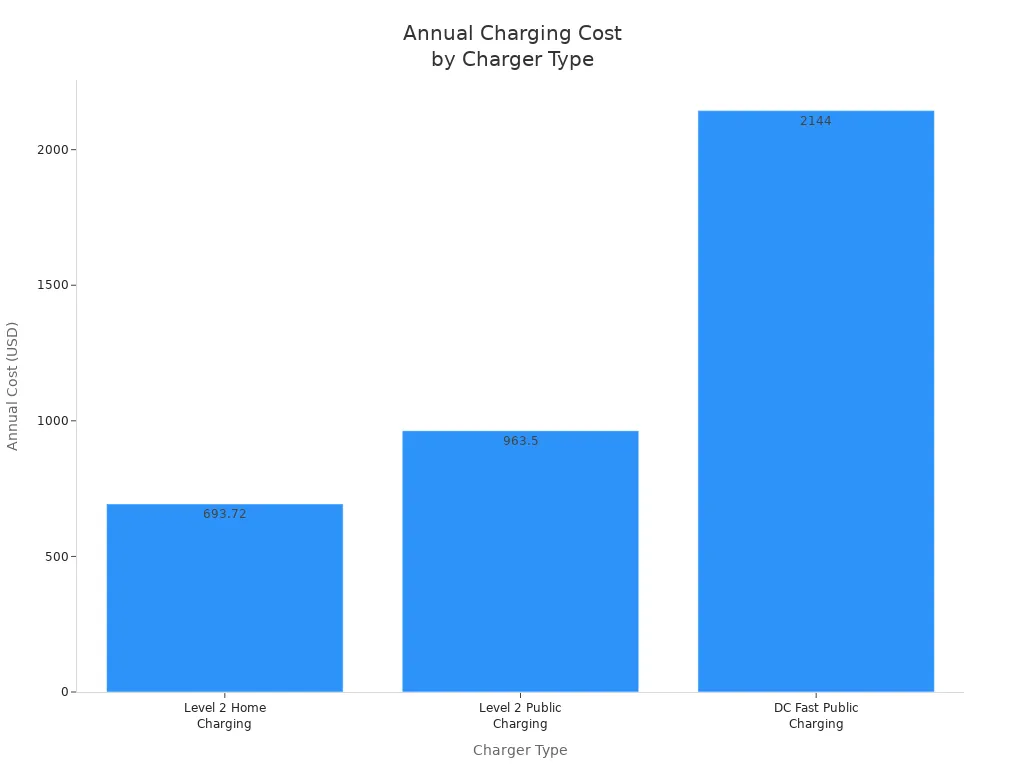
Choose the charger that matches your driving habits for the best EV experience.
You will see Level 1 chargers use a standard outlet and charge slowly. Level 2 chargers work faster and need a special outlet. Level 3 chargers, also called DC fast chargers, give your ev a quick charge at public stations.
Yes, you can install a Level 2 charger at home. You need a 240V outlet. Many ev owners choose this option for faster charging. You may need an electrician to help with installation.
Charging time depends on the charger type and your ev battery size. Level 1 chargers may take over 20 hours. Level 2 chargers usually take 4 to 10 hours. Level 3 chargers can charge your ev in less than an hour.
Not every ev supports DC fast charging. You should check your ev’s manual or ask your dealer. Some older models only use Level 1 or Level 2 chargers.
Yes, charging your ev overnight is safe. Modern chargers have safety features. You can plug in your ev before bed and wake up to a full battery.


