
close
Choose Your Site
Global
Social Media


Views: 0 Author: Site Editor Publish Time: 2026-06-05 Origin: Site


The rapid evolution of electric vehicles (EVs) has significantly transformed the automotive industry, bringing both unprecedented opportunities and new challenges. Among these challenges, ensuring vehicle safety while maintaining efficient energy management is paramount. Modern EVs rely heavily on their power systems to supply electricity to all onboard electronics, manage battery charging, and maintain operational stability. Any disruption in this system can affect critical functions such as steering, braking, and electronic control systems.
The 6.6kW OBC + 3kW DC/DC system represents a critical innovation in EV energy management. This integrated module combines an on-board charger (OBC) with a DC/DC converter into a single, compact solution, optimizing energy conversion, minimizing system complexity, and improving overall safety. By integrating these two components, manufacturers can achieve higher efficiency, reduce potential points of failure, and enhance the reliability of the vehicle’s electrical systems.
This article will provide an in-depth analysis of the 6.6kW OBC + 3kW DC/DC system, exploring how it contributes to enhanced vehicle safety through electrical protection, thermal management, intelligent control, and efficient energy conversion.
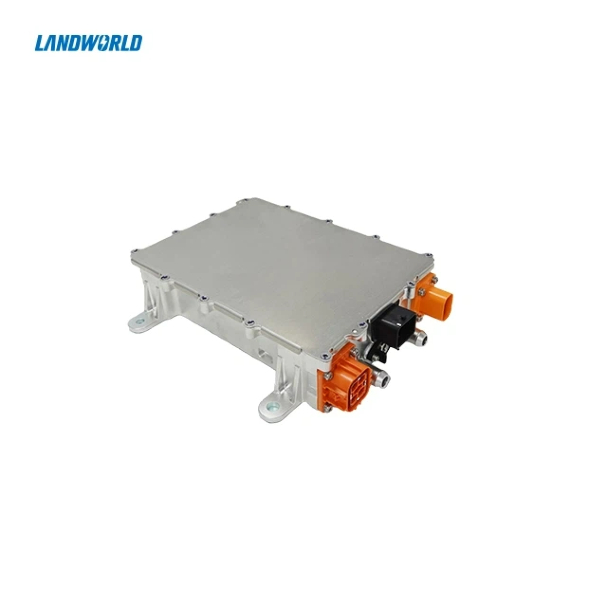
An On-board Charger (OBC) is a critical component in any electric vehicle, responsible for converting AC power from external sources into DC power to charge the vehicle’s high-voltage battery. The 6.6kW OBC is designed to support moderate to high charging speeds, balancing efficiency and safety. It regulates voltage and current meticulously, preventing overcharging and undercharging conditions that could potentially degrade battery life or affect vehicle electronics.
In addition to basic energy conversion, a high-quality OBC like the 6.6kW model is designed to operate under a wide range of input voltages and frequencies, accommodating diverse electrical infrastructures across different regions. By ensuring precise current and voltage regulation, the system protects sensitive components and maintains stable operation under various environmental conditions, contributing significantly to vehicle safety.
A DC/DC converter plays an equally important role in EV safety and performance. It steps down the high-voltage DC output from the main battery to lower voltage levels suitable for auxiliary systems such as infotainment, lighting, power steering, and control units. The 3kW DC/DC converter within this integrated system ensures that these critical electronics receive a stable and reliable power supply.
Unlike standalone converters, this DC/DC module is optimized for integration with the OBC, enabling synchronized operation and reducing electrical noise. The converter’s precision control minimizes voltage fluctuations that could otherwise compromise the safety and performance of vehicle electronics. Together, the 6.6kW OBC and 3kW DC/DC converter provide a cohesive, reliable power architecture that enhances both safety and efficiency.
Integrating the OBC and DC/DC converter into a single 2-in-1 system offers multiple engineering advantages. By reducing the number of separate modules, manufacturers can simplify vehicle wiring, reduce potential connection failures, and lower overall system weight. This integration also allows for coordinated control strategies, ensuring that charging, voltage conversion, and energy distribution are managed efficiently and safely.
Additionally, the 2-in-1 integration enhances space efficiency, an essential consideration in modern EV design, where compact layouts and weight reduction are crucial for performance, handling, and crash safety.
Electrical protection is one of the fundamental mechanisms by which the 6.6kW OBC + 3kW DC/DC system enhances vehicle safety. The system is equipped with advanced over-voltage, under-voltage, short-circuit, and overload protection features. These protections prevent damage to the battery pack and downstream electronics, ensuring consistent power delivery even under abnormal conditions.
In addition, the system provides stable output voltage and current, which is critical for maintaining the safe operation of sensitive components such as the Battery Management System (BMS), braking systems, and other safety-critical electronics. By actively monitoring electrical parameters and responding to anomalies, the module reduces the risk of component failure and prevents potential safety hazards.
Thermal management is a key safety factor in high-power EV systems. The 6.6kW OBC + 3kW DC/DC system incorporates advanced liquid cooling techniques that efficiently remove heat from power electronics. This cooling system maintains optimal operating temperatures, reducing thermal stress on components and preventing overheating conditions that could lead to system failure.
Efficient heat dissipation also contributes to the longevity of the module and ensures consistent performance over extended operational periods. Maintaining thermal stability is especially important in high-temperature environments or during fast-charging sessions, where excessive heat could compromise battery and electronic safety.
The integrated design of the 6.6kW OBC + 3kW DC/DC system inherently improves reliability. Fewer components and connections reduce the probability of electrical faults and simplify maintenance requirements. Moreover, the system’s digital control architecture provides real-time monitoring, self-diagnostics, and fault detection, allowing for immediate response to anomalies.
Consistent and predictable power delivery ensures that all safety-critical vehicle functions operate correctly, reducing the risk of malfunction. By combining reliability, intelligent control, and redundancy management, the system provides a higher safety margin compared to separate, uncoordinated modules.
The integration of advanced communication protocols is essential for modern EV safety. The 6.6kW OBC + 3kW DC/DC system supports CAN-FD communication, enabling seamless interaction with the vehicle’s BMS and VCU.
Through this communication framework, the system can:
Continuously monitor voltage, current, and temperature parameters
Trigger real-time fault alerts and protective shutdowns
Optimize energy flow and prioritize power allocation to safety-critical systems
Enable smart wake-up and sleep modes for energy conservation and reduced component stress
By providing intelligent control and feedback, the system ensures that potential safety issues are addressed proactively, enhancing overall vehicle reliability.
The 6.6kW OBC + 3kW DC/DC system features a compact form factor of 280 x 210 x 68 mm and a total weight of ≤6 kg. These characteristics contribute directly to vehicle safety in several ways:
⦁ Space Optimization: Smaller dimensions allow for flexible integration in tight engine compartments or underbody areas, reducing exposure to mechanical hazards.
⦁ Crash Safety: Optimized placement within the vehicle can enhance structural integrity and minimize the impact on occupants during collisions.
⦁ Reduced Wiring Complexity: Fewer connectors and shorter wire runs decrease the likelihood of electrical faults, which can compromise safety systems.
The combination of lightweight design and compact packaging supports both operational performance and safety considerations.
High efficiency in power conversion translates into safer and more reliable vehicle operation. The 6.6kW OBC + 3kW DC/DC system achieves efficiency levels of ≥94% for both the OBC and DC/DC components.
Key safety advantages of high efficiency include:
Reduced heat generation, lowering the risk of thermal damage
Stable voltage supply for electronics, preventing malfunctions
Optimized energy flow, ensuring consistent and predictable vehicle response
Efficiency-driven design not only improves operational performance but also directly contributes to a safer, more reliable EV environment.
The system’s bidirectional energy flow capability allows for advanced functions such as Vehicle-to-Load (V2L) and Vehicle-to-Grid (V2G) operations. This feature provides:
Flexibility for future energy management scenarios
Emergency power supply options without compromising battery safety
Long-term adaptability across various EV platforms
By supporting future-ready integration, the 6.6kW OBC + 3kW DC/DC system ensures that EVs can safely incorporate emerging energy technologies while maintaining high reliability.
Feature | Specification | Benefit for Vehicle Safety |
OBC Power | 6.6 kW | Efficient battery charging, prevents overcharging |
DC/DC Power | 3 kW | Stable low-voltage supply to electronics |
Efficiency | ≥94% | Reduces heat generation, protects components |
Cooling | Liquid cooling | Maintains safe operating temperatures |
Weight | ≤6 kg | Compact, supports crash safety and lightweight design |
Communication | CAN-FD | Real-time monitoring, fault alerts |
Integration | 2-in-1 | Fewer components, lower failure risk |
Bidirectional | Yes | Supports V2L/V2G, energy flexibility |
The 6.6kW OBC + 3kW DC/DC system is a highly efficient, intelligent, and fully integrated EV module designed to enhance vehicle safety. Its compact design, advanced thermal management, precise electrical protections, and robust communication capabilities ensure reliable and secure operation for a wide range of electric vehicles.
By integrating these critical power systems, Landworld Technology Co., Ltd. helps EV manufacturers reduce potential failure points, improve overall reliability, and deliver safer driving experiences. The combination of high efficiency, bidirectional energy flow, and future-ready integration establishes this system as a cornerstone technology for modern EVs seeking optimal safety and performance.
We invite industry professionals to explore Landworld Technology Co., Ltd.’s advanced EV modules, learn more about their capabilities, and connect with our team for customized solutions tailored to specific vehicle requirements, ensuring safer, more efficient, and reliable electric vehicle operations.
Q1: What is a 6.6kW OBC + 3kW DC/DC system?
A: It is an integrated EV module combining a 6.6kW on-board charger and a 3kW DC/DC converter, providing efficient energy conversion and stable power for vehicle electronics.
Q2: How does it improve EV safety?
A: Through advanced electrical protection, thermal management, intelligent monitoring, and consistent power delivery, it reduces risks to both battery and electronic systems.
Q3: Can it be used in different types of EVs?
A: Yes, the system is compatible with passenger cars, commercial EVs, and special electric vehicles, providing versatile safety and performance benefits.
Q4: Why is 2-in-1 integration advantageous?
A: Combining OBC and DC/DC reduces wiring complexity, improves efficiency, and lowers the potential for component failures.
Q5: Does it support bidirectional energy flow?
A: Yes, bidirectional capability allows Vehicle-to-Load (V2L) or Vehicle-to-Grid (V2G) operations, enhancing energy flexibility and vehicle safety.


