
close
Choose Your Site
Global
Social Media


Views: 0 Author: Site Editor Publish Time: 2026-07-27 Origin: Site


You work with electronics or power systems, so you should know the main difference between an AC DC converter and a DC-DC converter. An AC DC converter changes alternating current from the wall into direct current for devices that need steady power. A DC-DC converter takes direct current voltage and changes it to a different level. This difference is important because your choice of power conversion affects your design and how well your system works.
An AC DC converter turns wall power (AC) into steady power (DC) for things like laptops and TVs. - A DC/DC converter changes the voltage of DC power, so it works for devices that need different voltages. - Always look at your device's power needs before picking a converter to stop damage and stay safe. - DC/DC converters work better than old types, so devices stay cooler and last longer. - Think about safety features and how well it works when picking a converter to make sure your projects work well.
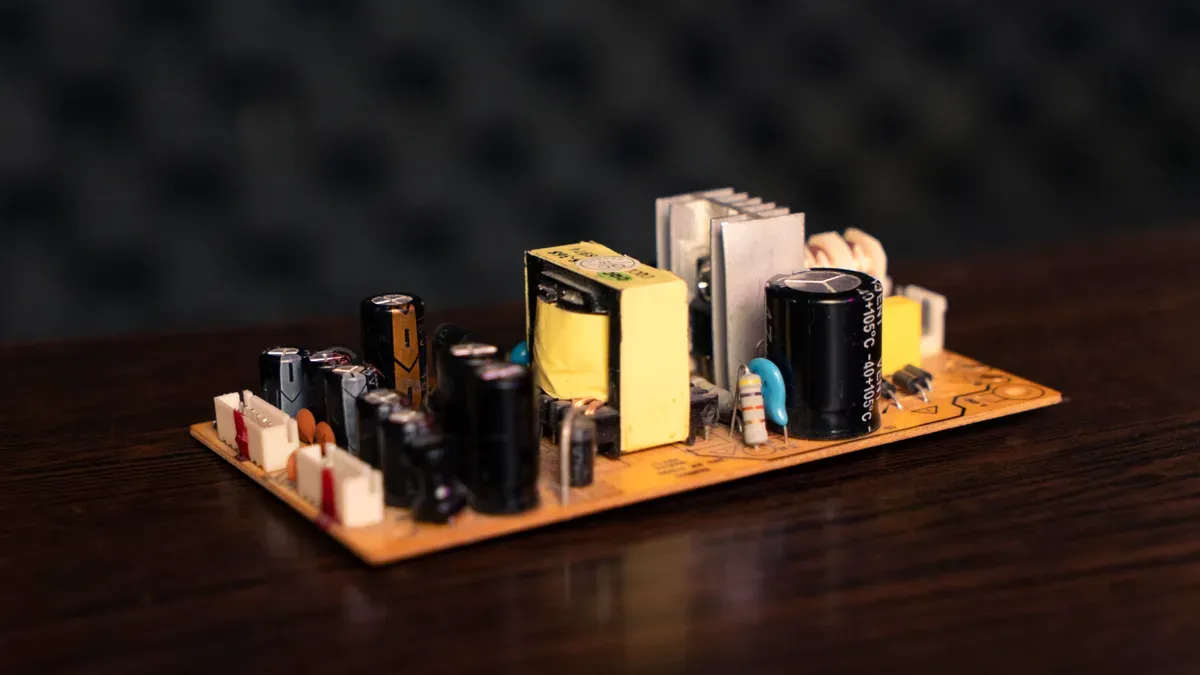
You use an ac dc converter to change power from the wall so your electronics can use it. This device takes AC and turns it into DC. Many things, like laptops and LED lights, need DC power to work well and safely. The ac dc converter gives your equipment the right kind of electricity.
An ac dc converter has a few main parts that help it work. Each part does something important. You can see what each part does in the table below:
Component | Function |
|---|---|
Transformer | Changes the voltage of AC power to the level you need. |
Rectifier | Turns AC voltage into DC voltage with some ripples. |
Filter | Makes the DC smoother and more steady. |
Regulator | Keeps the DC output the same even if the input changes. |
Protection Circuits | Protects against too much voltage, current, or short circuits. |
First, the transformer makes the voltage safe. Then, the rectifier changes AC into DC, but it still has ripples. The filter smooths out the ripples. The regulator keeps the output steady. Protection circuits keep your devices safe from electrical trouble.
Tip: Always check if your device needs an ac dc converter before you plug it in. This helps stop damage.
You see ac dc converters in lots of places. You use them in phone chargers, computers, TVs, and some kitchen tools. Factories use big ac dc converters for machines that need steady DC power. You also find these converters in electric cars to help charge batteries. When you pick an ac dc converter, you make sure your devices get the right power and last longer.

You use a dc/dc converter to change DC voltage. It helps your electronics get the right voltage. Sometimes your battery gives a different voltage level. You find dc-dc power supplies in many devices. They are in small gadgets and big machines. There are different types of converters. The table below shows the main types and what makes them special:
Type of Converter | Description |
|---|---|
DC/DC Converter | Changes DC from one voltage level to another. |
Buck Converter | Lowers voltage and increases current. |
Boost Converter | Raises voltage and decreases current. |
Buck-Boost Converter | Can raise or lower voltage, depending on what you need. |
A dc-dc converter switches the input voltage on and off fast. Special circuits store and release energy. This changes the voltage up or down. Modern dc-dc power supplies are very efficient. Some reach up to 93% efficiency. Less energy turns into heat. This helps your devices last longer. It also saves battery life. You find these converters in cell phones and laptops. They are in any device that uses batteries. They adjust voltage for each part inside your device. This makes everything work well.
Note: DC-DC converters waste less energy than older types. Linear regulators waste more energy. Your portable devices stay cooler and run longer.
You see dc-dc power supplies in many places. In cars, they power sensors and control units. In factories, they run machines and robots. You also find them in solar power systems and battery chargers. Here are some common uses:
Powering car electronics like sensors and control modules
Giving energy to portable devices like laptops and smartphones
Running LED lights with the right voltage
Charging batteries in solar and backup systems
Testing new car parts with programmable dc-dc power supplies
The market for dc-dc power supplies keeps growing. You need these converters for new technology in cars and industry. They help you save energy. They make your devices work better.
You should know what power goes in and comes out. An AC DC converter takes alternating current from the wall. It turns it into direct current. You use this when your device needs DC power. But you only have AC power. A DC/DC converter takes direct current. It changes the voltage to another DC level. You use this when you already have DC power. But your device needs a different voltage.
Here is a simple table to show the differences:
Characteristic | AC DC Converter | DC/DC Converter |
|---|---|---|
Input type | Alternating current (mains) | Direct current (battery, bus, regulated supply) |
Output type | Regulated DC voltage | A different regulated DC voltage |
Conversion stages | Rectification, filtering, regulation | Switching, magnetics, regulation |
Isolation | Required for mains safety | Optional, topology-dependent |
Position in power chain | Entry point from the grid | Downstream voltage management |
Tip: Always check your power source before picking a converter. This keeps your system safe and stops damage.
You use an AC DC converter to change AC power into DC power. This is the first step in most electronic systems. The converter uses a transformer, rectifier, filter, and regulator. These parts make the power safe and steady. You find this in phone chargers, computers, and TVs.
A DC/DC converter changes one DC voltage to another. You use it to match the voltage your device needs. It works by switching the input on and off very fast. This makes it more efficient than older converters. You find a DC/DC converter in laptops, cars, and solar systems.
Here is how the efficiency compares:
Converter Type | Efficiency Range |
|---|---|
AC-DC | 85–93% |
DC-DC | 90–98% |
You get higher efficiency with a DC/DC converter. Less energy turns into heat. Your devices stay cooler and last longer.
You see AC DC converters and DC/DC converters in many places. Each one fits a different job.
AC DC Converters:
You use these in control panels and PLCs powered from the wall.
You find them in EV charging stations as the first step to charge batteries.
You see them in building automation and HVAC systems.
You use them in solar inverters and battery storage systems that connect to the grid.
DC/DC Converters:
You use a DC/DC converter in battery-powered IoT sensors and wireless devices.
You find them in embedded systems with many voltage rails.
You use them in motor drives and robotics for gate drivers and control circuits.
You see them in aerospace and research equipment where tight voltage control is needed.
Note: Pick a DC/DC converter when you need to change DC voltage levels inside your device. Pick an AC DC converter when you need to turn AC from the wall into DC.
Use this table to compare the main points between AC DC converters and DC/DC converters:
Feature | AC DC Converter | DC/DC Converter |
|---|---|---|
Input | AC (from wall or grid) | DC (from battery or bus) |
Output | DC (fixed voltage) | DC (different voltage, adjustable) |
Main Function | Converts AC to DC | Changes DC voltage up or down |
Efficiency | 85–93% | 90–98% |
Common Use | First stage in power supply | Voltage regulation inside devices |
Safety Isolation | Needed for safety | Sometimes needed, depends on design |
Example Devices | Phone chargers, computers, TVs | Laptops, cars, solar systems, IoT sensors |
Maintenance | Usually replace whole unit | Board-mount: fixed; Brick: easy to swap |
Remember: Pick the right converter based on your power source, voltage needs, and how much efficiency you want.
First, check if your power comes from the wall or a battery. Is it AC or DC? Next, find out what voltage your device needs. Some devices need 5V. Others need 12V or more. High efficiency means less heat and longer life for your device. Think about size and cost too. This is important if you have little space or money.
Here is a quick checklist to help you choose:
Find out if your input is AC or DC.
Check what voltage and current your device needs.
Decide if you need safety isolation.
Look at how efficient the converter is.
Think about size, cost, and space on your board.
Make sure your design follows safety rules.
Tip: Devices that use wall power must follow strict safety rules. Always check if your device meets these rules.
Some people pick the wrong converter because they skip steps. Never guess your voltage or current needs. Always measure or check your device’s manual. Do not forget isolation if your device connects to the grid. Skipping safety can break your device or hurt someone. Do not use a converter that is too small for your device. If you overload it, it can get too hot and stop working.
Double-check your input and output needs.
Use converters with built-in protection.
Plan for heat, especially in small spaces.
You may have problems when adding converters to your design. Fast switching can make electromagnetic noise. This noise can mess up sensors and wireless signals. You need to handle heat, especially if space is tight. Some converters get hot and need good airflow or heat sinks. Keep sensitive analog circuits away from noisy power lines.
Use filters to cut down noise.
Pick the right mounting style for your PCB.
Test for electromagnetic compatibility before you finish your design.
When you pick a DC-DC power supply for industry, look at more than just voltage and current. Use this table to help you choose:
Criteria | What to Look For |
|---|---|
Performance | High efficiency, low noise, steady output, fast response to changes |
Environmental Adaptation | Can handle heat, dust, water, shock, and vibration |
Reliability & Longevity | High MTBF, long warranty, strong parts |
Protection Functions | Over-voltage, over-current, short circuit, and over-temperature protection |
Compliance & Certification | Meets UL, CE, or other safety and EMC standards |
Note: Good power supplies keep your equipment safe and help you avoid costly downtime.
You need power that works well for your business. Landworld Technology is a top company for on-board power supply solutions. They help electric vehicles and factories. You get products made with smart technology and high power in a small size. Landworld owns the designs, so you get the latest features. Their solutions work for electric vehicles all over the world. You find their products in many countries. They support lots of popular electric vehicle brands.
You can pick from many DC/DC converters. Landworld has choices from 300W up to 12kW. You choose the power, voltage, and shape that fits your project. You also get important safety features. These include overvoltage, overcurrent, and thermal protection. These features keep your equipment safe and working well. Landworld helps with passenger cars, trucks, and off-road machines. You see their ac-dc power supplies in many factories. These places need power that is always reliable.
You feel safe when you use Landworld’s products. Their solutions help your business grow and use new technology.
You want power supplies that fit your factory needs. Landworld Technology gives you advanced DC-DC power supplies. These have features for tough places. You can change the power, voltage, and shape to fit your vehicles. You get built-in safety, like overvoltage, overcurrent, and thermal protection. You can pick from 300W to 12kW. This covers many needs for factories and vehicles.
Here is a table with the main features:
Feature | Description |
|---|---|
Customization Options | You pick power, voltage, and shape for your project. |
Safety Measures | You get overvoltage, overcurrent, and thermal protection for safe use. |
Power Range | You choose from 300W to 12kW for your needs. |
You see Landworld’s ac-dc power supplies in electric vehicles and factory machines. You trust their products because they are reliable and new. Landworld helps you fix hard power problems and supports your business needs.
You now know how AC DC converters and DC-DC converters are different. When you pick a converter, match what goes in and out. Always check the power ratings and where you will use it. Look for safety marks and strong design features. Watch out for heat and electrical noise. Make sure your converter is safe to use. If you want good results, ask experts or use trusted brands like Landworld Technology. This helps you make systems that work well and last a long time.
You risk damaging your device or causing safety hazards. Always check your power source and voltage needs before choosing a converter.
No, you cannot. DC-DC converters only work with DC input. You must use an AC DC converter if your power comes from the wall.
Check your input power type (AC or DC).
Find your device’s voltage and current needs.
Look for safety features.
Converter Type | Can Replace Each Other? |
|---|---|
AC DC | No |
DC-DC | No |
You cannot swap them. Each converter fits a specific job.


