
close
Choose Your Site
Global
Social Media


Views: 0 Author: Site Editor Publish Time: 2026-07-31 Origin: Site


You use a dc-to-dc converter to change one dc voltage to another. An inverter takes dc power and changes it into ac power. These devices are very important in modern electronics and electric vehicles.
The world wants more electric vehicles, so dc-to-dc converters and inverters are needed for battery systems, powertrain control, and making motors work well.
You might wonder what each device does, how they are different, and how to choose the right one. Keep reading for helpful tips.
A DC-to-DC converter changes one DC voltage to another. It makes sure devices get the right power. This helps devices work safely.
An inverter changes DC power into AC power. This lets you use AC devices with DC sources. These sources can be batteries or solar panels.
DC-to-DC converters work better and cost less for small devices. Inverters are better for running bigger AC appliances.
Electric vehicles use both converters and inverters. They help control battery voltage. They also help run AC motors well.
You should pick the right device for your power needs. Use converters to change DC voltage. Use inverters when you need AC power.
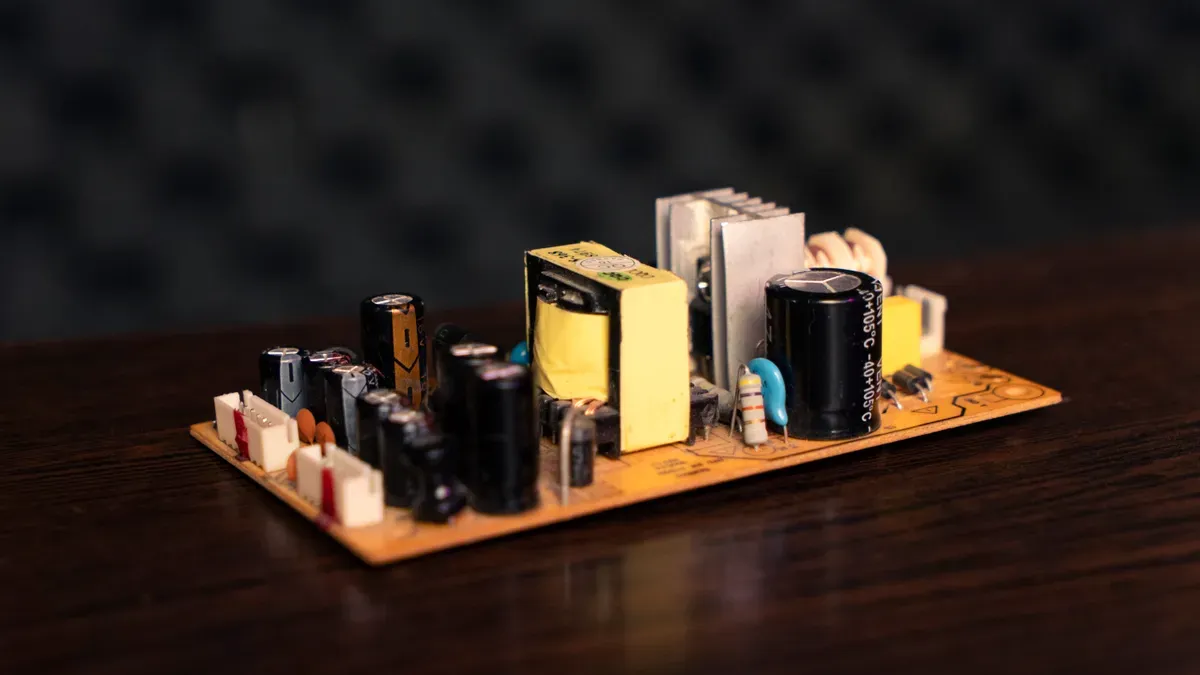
A dc-to-dc converter changes one dc voltage to another. This device helps different electronic parts get the right voltage. You can find dc-to-dc converters in many things. They are in small gadgets and electric vehicles. These converters make sure devices get enough power. In battery-powered systems, the battery voltage is not always right for the device. The converter fixes this problem.
Tip: A dc-to-dc converter gives your electronics steady voltage. This keeps them safe and working well.
A dc-to-dc converter uses different ways to change voltage. There are a few main types you can pick:
Zener diode regulator circuits use simple parts for basic voltage control.
Linear voltage regulator circuits give smooth output but waste more energy as heat.
Switching voltage regulator circuits use fast switches and storage parts to save energy.
Linear dc-to-dc converters are used in devices that need clean power. Medical equipment is one example. Switching dc-to-dc converters are good for battery-powered devices. They help save energy. Non-isolated converters are found in computers and cars. Isolated converters use transformers for safety in factories.
Efficiency is very important for a dc-to-dc converter. High efficiency means less energy is lost as heat. Some converters can reach up to 93% efficiency in step-down mode. In step-up mode, they can reach 91.3%. Good line regulation keeps the output voltage steady. This happens even if the input voltage changes.
You use dc-to-dc converters in many areas. Electric vehicles need them to lower high battery voltage. For example, they change 400 V or 800 V down to 12 V or 48 V. Pure battery electric vehicles use converters rated around 3 kW. Hybrid vehicles use smaller converters, usually less than 1 kW.
Here are some common uses:
Renewable energy systems control solar panel and wind turbine voltage.
Battery chargers, multimedia players, and game consoles use step-down converters.
Devices that need more voltage use step-up converters.
Industrial automation and communication equipment need dc-to-dc converters for steady power.
The market for automotive dc-to-dc converters is growing quickly. It may reach over USD 22 billion by 2033. This shows how important these converters are today.
Converter Type | Main Use | Efficiency (%) |
|---|---|---|
Linear | Low-power, clean output | 60-70 |
Switching | Battery-powered, flexible voltage | 85-93 |
Isolated | Safety, industrial automation | 80-90 |
Non-Isolated | Automotive, computers | 85-90 |
You see dc-to-dc converters everywhere. They help your devices work safely and smoothly.
An inverter changes dc power into ac power. This device lets you use ac appliances with dc sources. Batteries and solar panels are examples of dc sources. Inverters are important for home energy storage and electric vehicles. They help you use battery power for ac devices at home or in your car. The table below shows how an inverter is different from a dc-to-dc converter:
Feature | Inverter | DC-to-DC Converter |
|---|---|---|
Input | dc | dc |
Output | ac | Another level of dc |
Functionality | Converts dc to ac | Steps up or down dc voltage levels |
Applications | Powers ac appliances from dc sources | Battery charging, voltage regulation |
An inverter charging system takes dc and makes ac by switching the current direction very fast. It uses special switches to flip the current about 50 to 60 times each second. This fast switching copies how ac works in your house. The inverter charging process makes a wave like the ac from the power grid. You can think of it like a person flipping a switch back and forth quickly. The inverter charging system uses this way to power ac devices safely and well.
An inverter charging system flips the current direction many times each second.
This makes the output act like ac power, so you can use normal ac devices.
You see inverters in many places. At home, you use them for backup power and energy storage. Inverters let you run ac lights, fans, and appliances from dc batteries. In solar systems, inverters change dc from panels into ac for your house or the grid. In electric vehicles, inverters use battery dc to run ac motors. You also find inverters in offices, factories, and big buildings.
Here is a table that shows different inverter types and their best uses:
Inverter Type | Best Use Description |
|---|---|
String Inverters | Uniform rooftops without much shading |
Microinverters | Shaded roofings, complex designs, or future expansion |
Hybrid Inverters | Homes with battery storage or average shaded roofs |
Central Inverters | Large commercial or industrial installations |
Grid-Tie Inverters | Grid-connected systems for savings |
Tip: Pick the right inverter charging system for your needs. The right one helps you get the most from your dc power and keeps your ac devices working well.
It is important to know how a dc-to-dc converter and an inverter work. The biggest difference is in how each device changes power. A dc-to-dc converter takes one dc voltage and makes it into another dc voltage. It does this with just one step. This makes it simple and quick. An inverter takes dc power and turns it into ac power. It uses two steps to do this. First, it switches the dc current back and forth. Then, it shapes the output so it matches ac power.
Here is a table that shows the main differences in how these devices work:
Feature | DC-to-DC Converters | Inverters |
|---|---|---|
Efficiency | More efficient due to single conversion | Less efficient due to dual conversion |
Cost | Generally cheaper due to simpler technology | Typically more expensive due to complexity |
Size and Weight | Smaller and lighter, suitable for portability | Larger and heavier, better for stationary use |
Installation Complexity | Easier to install, DIY-friendly | Requires professional installation |
Best Use Cases | Ideal for smaller devices and portable use | Better for larger devices with high wattage demands |
A dc-to-dc converter is best when you need to change voltage for small devices or battery systems. An inverter is best when you want to run ac appliances from a dc source.
You want your power system to waste as little energy as possible. A dc-to-dc converter is usually more efficient because it only changes the voltage once. Most dc-to-dc converters work at 90% to 98% efficiency. This means they waste very little energy as heat.
An inverter has to do more work. It changes dc to ac, and sometimes back to dc for some devices. This two-step process causes more energy loss. Good inverters can reach 94% to 98% efficiency, but most lose about 5% to 10% of energy during conversion.
dc-to-dc converters save energy with just one step.
inverters lose more energy because they use two steps.
Note: If you want to save battery life and make less heat, use a dc-to-dc converter for simple voltage changes. Use an inverter only when you need ac power.
You also need to think about cost, size, and how easy it is to install each device. A dc-to-dc converter costs less because it uses simple parts. For the same power, a dc-to-dc converter usually costs $0.10 to $0.20 per watt. An inverter costs more, usually $0.30 to $0.60 per watt. This higher price is because it has more parts and a harder design.
A dc-to-dc converter is smaller and lighter. You can carry it and install it yourself. Many people use dc-to-dc converters in RVs, cars, and portable devices. An inverter is bigger and heavier. It works best in one place, like a home or a large vehicle. You often need a professional to install an inverter because it has more wires and safety rules.
Here is a quick look at the cost difference:
Device Type | Cost per Watt |
|---|---|
DC-to-DC Converter | $0.10–$0.20 |
Inverter | $0.30–$0.60 |
Tip: If you want a simple and cheap way to change dc voltage, pick a dc-to-dc converter. If you need to power ac devices, plan for a higher cost and a harder installation with an inverter.
Now you can see that picking a dc-to-dc converter or an inverter depends on what you need. Think about what devices you want to power, how much energy you want to save, and how much money you have for installation.
You use dc to dc converter charging to help charge batteries. This process controls how much voltage and current goes to batteries. Dc to dc converter charging uses different charging steps. These steps are called bulk, absorption, and float. Each step helps protect your battery and makes it last longer. Lithium batteries need special charging care. Dc to dc converter charging gives the right voltage and current for lithium batteries. This stops overcharging and overheating. Dc to dc converter charging works well in off-grid solar systems. It lets you use extra energy when voltage is low, like in the morning or on cloudy days. Dc to dc converter charging does not need the minimum voltage that inverters do. You get more energy from your solar panels this way. Dc to dc converter charging also lets you control how fast power changes. This helps keep your system steady.
Tip: Dc to dc converter charging helps save energy and makes things work better. Your batteries last longer and you get more power from your system.
You use a dc to dc converter when you need to control dc voltage for devices. Dc to dc converter charging keeps dc voltage steady. You can raise or lower dc voltage for batteries and small electronics. Dc to dc converter charging is used in solar power and battery charging. Dc to dc converter charging is cheap and works well. It lets you use extra energy that other systems might waste. Dc to dc converter charging is good when you want to avoid low voltage problems. You get steady energy sent to the grid.
Dc to dc converter charging is great for charging batteries.
Dc to dc converter charging is used in solar power, small devices, and electric cars.
You use an inverter when you need to change dc power into ac power. Inverters are important in green energy systems. You use them to run ac devices from dc sources like solar panels and batteries. Inverters are needed in electric cars. They change dc from the battery into ac for the motor. Inverters are also used in big machines. You run ac systems using dc power. Inverters help you use ac devices at home, work, or in your car.
Device Type | Best Use Case |
|---|---|
DC-to-DC Converter | Battery charging, voltage regulation |
Inverter | AC device power, grid integration |
Note: Pick dc to dc converter charging for good battery care. Use an inverter when you need ac power for things like appliances or motors.
If you need good dc-to-dc converters and inverters, Landworld Technology is a top choice. Their products are original and protected by their own rights. This means you get something special that others cannot copy. Landworld makes products that are strong and can handle a lot of power. They use new technology to keep up with electric vehicle needs around the world. Every product is tested carefully to make sure it is safe and meets world rules.
You can pick from many dc-to-dc converter sizes, like 300W, 2kW, 2.5kW, 3kW, 5kW, 6kW, and 12kW. If you need something different, you can ask for a custom design. You can choose what power, voltage, or shape you want. Each dc product has safety features. These protect against too much voltage, too much current, or getting too hot. Landworld checks every product to make sure it works well in electric vehicles.
All products have their own rights
Products are strong and powerful
New technology for the world market
Many sizes and custom choices
Safety features for protection
Careful testing for world rules
Landworld Technology dc-to-dc converters and inverters are used in many jobs. The table below shows where you can use them:
Industry | Application Description |
|---|---|
Automotive | dc-to-dc converters help control power in electric and hybrid cars. They keep voltage steady for all parts. |
Renewable Energy | They control voltage from solar panels and wind turbines. They help charge batteries or connect to the grid. |
Telecommunications | They give steady voltage to telecom tools. This protects from voltage spikes and keeps service working well. |
Consumer Electronics | They help things like phones and laptops use battery power better. This makes batteries last longer and stay cool. |
You can trust Landworld to give you good dc products for your work.
If you want better dc-to-dc converters and inverters, Landworld can help. Their 6kW dc converters are small but powerful. These can fix supply chain problems in electric vehicles. Your company can grow and become stronger.
Landworld has important certificates like IATF 16949 and ISO 26262. They help set rules for the country and lead with new technology. You can read more on the About Us page. If you want to talk about your needs, go to the Contact Us page. For electric car solutions, see our solutions page.
You can always count on Landworld for smart, safe, and trusted dc products.
You now understand the main differences between DC-to-DC converters and inverters. DC-to-DC converters change the voltage in DC systems. Inverters turn DC power into AC power for other devices. Picking the right device helps keep things safe, efficient, and reliable.
Isolated converters make things safer and block noise.
Non-isolated converters are smaller and use energy better.
Benefit | Description |
|---|---|
Improved Energy Efficiency | Less power is wasted, so batteries last longer |
Enhanced Performance | Devices work smoother and more reliably |
Increased Reliability | There are fewer problems, and systems are safer |
Some people make mistakes by not checking their power needs or using the wrong device. You can stop these problems by choosing what fits your system best.
At Landworld Technology, we are experts in on-board power for electric vehicles. Our team and products are certified and use new ideas. This means you get safe and high-performing solutions. Learn more about us or contact us for help that fits your needs.
A DC-to-DC converter changes one DC voltage to another. You use it to make sure your devices get the right voltage and work safely.
You should use an inverter when you need to power AC devices from a DC source, like running home appliances from a battery or solar panel.
Yes, you can. A DC-to-DC converter gives the right voltage and current for lithium batteries. This helps protect your battery and makes it last longer.
Electric vehicles use converters to adjust battery voltage for electronics. They use inverters to run AC motors from the DC battery.
Think about what devices you want to power. Use a DC-to-DC converter for DC devices and battery charging. Use an inverter for AC devices.


