
close
Choose Your Site
Global
Social Media


Views: 0 Author: Site Editor Publish Time: 2026-07-21 Origin: Site


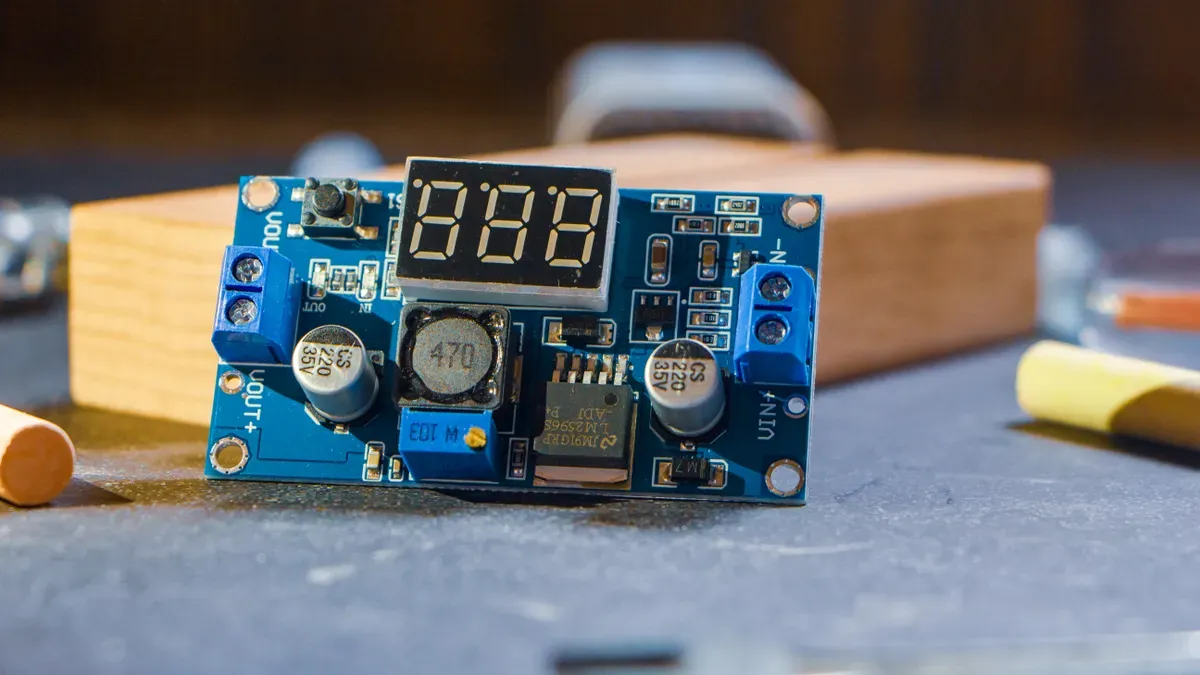
When you pick the best voltage for a dc-to-dc converter, you make sure your device gets the power it needs and works well. You should look at what voltage and current your device needs. Decide if you want regulated or unregulated output. The choice you make changes how efficient your device is, how much heat it makes, and how long it lasts.
Feature | Industrial Systems | IoT Devices |
|---|---|---|
Input Voltage | 12V, 24V, or 48V rails | 3.0–4.2V batteries |
Load Current | 1–5A or more | 10mA–1A |
Efficiency Focus | Reliability is key | Battery life is critical |
Efficiency affects how much power is lost and how much heat is made.
Stable voltage helps your device work well.
Protection features keep your device safe from harm.
When you pick a converter, always match the voltage to your device’s load. This keeps your device safe and working well.
Make sure the output voltage fits what your device needs. This helps your device work right and stay safe.
Pick regulated converters if your device needs steady voltage. This stops damage and keeps your device working well.
Think about efficiency when you choose a converter. Higher efficiency wastes less energy and makes less heat.
Learn about the types of converters like buck, boost, and buck-boost. This helps you pick the best one for your voltage needs.
If your device uses batteries, choose converters that work well as battery voltage drops.

You can find dc-dc converters with output voltages like 28V, 12V, 5V, and 3.3V. Each voltage is used for different things. Industrial machines often use 28V or 24V for motors and controls. Computers and network gear need 12V for fans and hard drives. Microcontrollers and sensors usually need 5V or 3.3V to work safely.
Output Voltage | Typical Application |
|---|---|
28V | Industrial controls, avionics |
12V | Automotive, computers |
5V | USB devices, sensors |
3.3V | IoT devices, microcontrollers |
You have to pick the right output voltage for your device. If you choose the wrong voltage, your device might not work or could break. Always check what your device needs before picking a dc-to-dc converter.
Tip: When you make a power supply for sensitive electronics, use the lowest voltage that still works for your device. This helps keep things cool and saves energy.
A regulated dc-dc converter keeps the output voltage steady, even if the load changes. This helps protect your device and makes it work better. Regulated converters use feedback circuits to keep the voltage from going too high or too low.
Unregulated dc-dc converters do not keep the output voltage steady. If the load gets bigger, the voltage can drop. Sensitive devices might stop working or get damaged if the voltage changes too much. You should use regulated converters for most things, especially when you need steady voltage and to keep your device safe.
Regulated dc-dc converters give a steady output voltage, which is important for keeping voltage stable and your device safe. Unregulated converters do not do this, so the voltage can change and hurt your device if it goes too high. Unregulated power supplies give a certain voltage at full load, but if the load gets bigger, the voltage can drop, which is not good for sensitive devices.
⚠️ Note: Always use regulated dc-dc converters for electronics that need exact voltage. Unregulated converters are okay for simple things that can handle voltage changes.
You need to know what your device does and what it powers. The best voltage for your dc-dc converter depends on what your device needs. Check the voltage and current your device uses. If you pick the wrong voltage, your device can break or stop working.
Here are some things to think about when you pick the output voltage for your dc-dc converter:
Efficiency
Noise
Size
Cost
What your device needs
How much power your device uses
What kind of load you have
Where the power comes from
How long you want it to run if you use batteries
You should figure out how much current your device uses. Load current means how much current your device needs to work. If you do not match the converter to the load, your device can get too hot or not get enough power. For example, sensors and microcontrollers often use 3.3V or 5V and only need a little current. Big machines may need more voltage and more current.
Specification Type | Voltage Range | Current (Maximum) |
|---|---|---|
Sensor Side Power Input | 5 V DC | 50 mA |
Output Side Power Input | 3.3 / 5 V DC | 20 mA |
If you do not match the voltage to the load, you can have problems:
Too much voltage can wear out parts and make them break faster.
Not enough voltage can make devices act weird or keep restarting.
Changing voltage can mess up how things work and make them fail early.
Always match the output voltage and current to what your device needs. This helps you pick the best voltage for your dc-dc converter.
Efficiency is very important when you pick the best voltage for your dc-dc converter. High efficiency means less energy turns into heat. If the input voltage is close to the output voltage, the converter works better. If the input voltage is much higher or lower, the converter wastes more energy as heat.
Dc-dc converters work better when input and output voltage are close.
Efficiency goes down if the input voltage is much higher or lower than the output voltage.
In stepdown mode, a converter can be 93% efficient with 6V in and 5V out.
In step-up mode, it can be 91.3% efficient with 4V in and 5V out.
How much heat is made also depends on the output voltage and load. If you use a low output voltage with a big load, the converter should be close to the device to save power. In big systems, like data centers, heat can be a big problem. For example, if the load goes from 100W to 1kW, heat can go from 15W to 50W. You need to watch both normal and peak load ratings to stop overheating.
Tip: Always check how hot your dc-dc converter can get. Good cooling keeps your power supply safe and working well.
There are different types of dc-dc converters. Each one works best for different input and output voltages.
A buck converter makes a high input voltage lower. You use this for low-voltage rails like 5V, 3.3V, or 1.8V.
A boost converter makes a low input voltage higher. This is good when your power source, like batteries, gives less voltage than your device needs.
A buck-boost converter can make voltage go up or down. This helps if your input voltage changes above or below what you need.
The input voltage comes from your power source. It can stay the same or change, like with batteries. The output voltage can be fixed or you can adjust it, depending on what your device needs. Adjustable dc-dc converters give you more choices. You can set the output voltage for different devices or loads. This is good if your system changes or if you use batteries that lose power over time.
Universal dc-dc converters can make the input voltage go up or down to get the right output voltage.
These are called buck-boost converters.
You use them when your input voltage changes a lot.
⚡ Note: Pick the converter type that fits your input voltage, output voltage, and load. This helps you get the best voltage and makes your dc-dc converter work well.
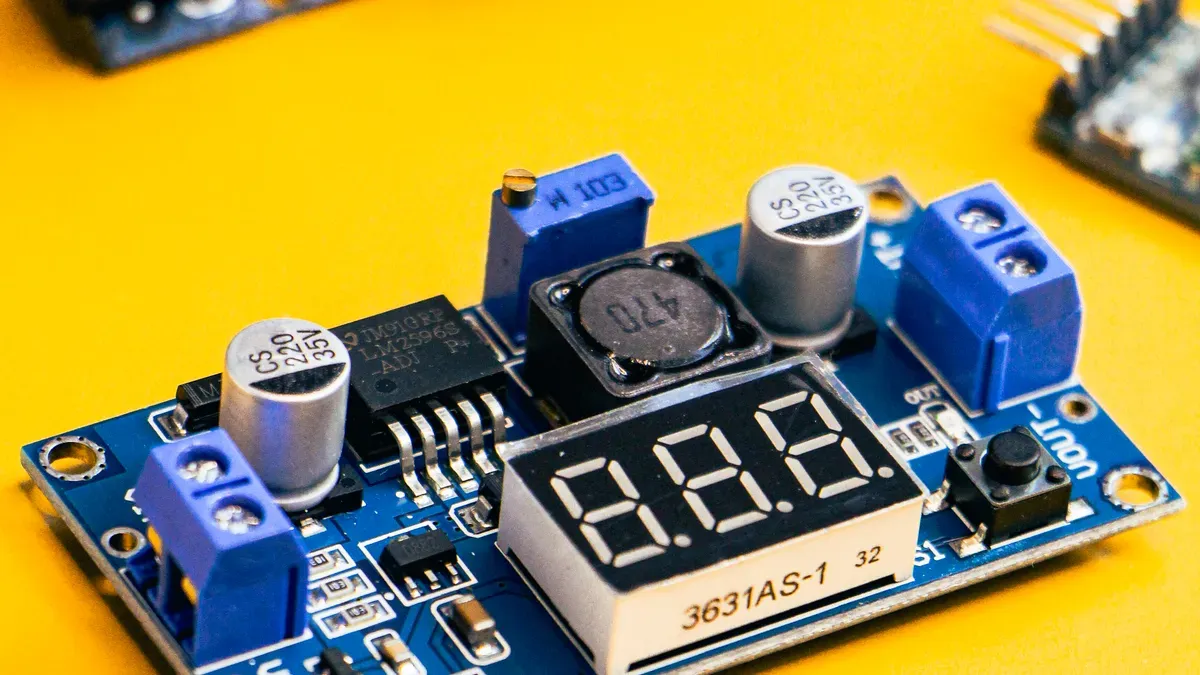
You must match the output voltage to your device’s needs. First, look at the voltage and current on your device label or datasheet. Using the wrong voltage can break your device or make it not work. Always use a regulated dc-dc converter for electronics that need steady voltage.
Pick a converter with the right output voltage for your device.
Make sure the converter can give enough power for your device.
If you use batteries or solar panels, check the input voltage range.
Put the dc-dc converter close to your device to stop voltage drop and help efficiency.
Tip: For battery-powered devices, choose a converter that still works when the battery voltage gets lower as it runs out.
There are many types of dc-dc converters for different jobs. Here are some common examples:
Buck converters lower a high input voltage to a lower output voltage. You use these for things like processors, memory, and FPGAs that need exact voltage.
Boost converters raise a low input voltage to a higher output. These are good for devices that use batteries, solar panels, or are in a solar setup. You see them in LED drivers, portable electronics, and car power supplies.
Buck-boost converters can both raise and lower voltage. They keep the output voltage steady even if the input changes. You use these in portable medical devices, factory machines, and car modules.
If you build a solar setup, you might use a boost converter to raise the voltage from solar panels to charge a battery or power something. In factories, you often need a buck converter to give steady voltage to controls that are sensitive. Adjustable dc-dc converters let you set the output for different things, which helps if your system changes or uses different batteries.
⚠️ Note: Always check both the input and output voltage ranges before you connect your dc-dc converter to something new.
You need a dc-dc converter that works well every time. Landworld Technology makes converters with careful building and testing. These steps help each converter stay reliable. The liquid cooling system keeps the converter’s temperature steady. This helps the parts last longer. You can use more power in a smaller space.
Landworld Technology’s 12kW dc-dc converter handles big voltage and power needs. It works for electric vehicles and industrial systems. You can use this converter for heavy loads like pumps, fans, and controls. These loads are common in electric machines and big electric vehicles. The converter keeps your equipment running smoothly, even when the load changes.
You can trust Landworld’s products because they meet important standards.
The Landworld On-Board Charger (OBC) meets all industry rules in many places.
It gives better efficiency than normal at both regular and high loads.
This means you get stable and energy-saving battery charging for your electric vehicle system.
Landworld Technology gives you new ways to power machines. The company designs dc-dc converters for many needs in industry. You can see some features in the table below:
Feature | Description |
|---|---|
Integrated Systems | Puts many power supply parts into one unit. |
High Efficiency | Changes energy with little loss, so you save power. |
Customization Options | Lets you get a converter made for your special industrial load needs. |
You can use these dc-dc converters for many types of loads. If you need a dc battery charger or want better battery charging, Landworld has a solution. The converters work well in vehicle systems and factory machines. You get a power supply that matches your load and keeps your system safe and efficient.
If you want a converter that fits your needs, Landworld Technology can help. The team works with you to design a dc-dc converter for your load, your dc system, and your power supply needs.
Picking the best voltage for your dc-dc converter helps your device work well and stay safe. You should always match the voltage to what your device needs and how much power it uses. Think about how efficient your device will be and choose the right dc-dc converter type for your job. If you are not sure about dc or voltage choices, ask experts or trusted companies for help. Landworld can give you reliable dc-dc solutions. You can learn more about us or contact our team if you want help.
If you pick the wrong voltage, your device might not work. It could even get damaged. Always check what voltage your device needs before you connect a converter.
You need a regulated converter for electronics that need steady voltage. Use unregulated converters only for simple devices that can handle voltage changes.
You can use one converter if all devices need the same voltage and current.
If devices need different voltages, use separate converters or an adjustable one.
Efficiency shows how much power your converter wastes as heat. High efficiency means less heat and longer device life. This helps your device stay safe and saves energy.
Always match the converter’s output voltage and current to your device. Read the datasheet or ask an expert if you are not sure.


